 3 January 2026

By Publisher Ray Carmen
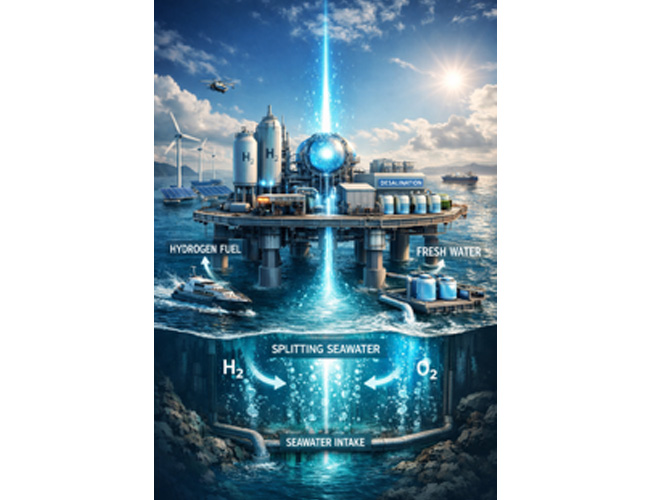
In a development that sounds like science fiction but is rapidly becoming scientific fact, China has unveiled a breakthrough technology capable of transforming ordinary ocean water into usable fuel , while simultaneously producing drinkable fresh water.
If scaled successfully, the implications could be nothing short of revolutionary for energy security, water-stressed regions, and island nations across the world.
How It Works , Sea, Split, Power
At the heart of the innovation is an advanced electrochemical process that allows seawater to be split efficiently into hydrogen and oxygen without the corrosive damage traditionally caused by salt. Hydrogen, widely viewed as the clean fuel of the future, can then be stored or used to generate electricity, power vehicles, or support industrial energy needs , all with zero carbon emissions at the point of use.
Crucially, the same system incorporates desalination technology, extracting fresh, drinkable water as part of the process. In effect, one machine tackles two of humanity’s biggest challenges at once: clean energy and clean water.
Why This Matters , Especially for Islands
For coastal and island regions , including much of the Caribbean , this technology could be transformative.
Instead of relying on expensive imported fuel and energy-hungry desalination plants, nations could theoretically harness the surrounding ocean itself to:
-
Generate renewable hydrogen fuel
-
Produce fresh drinking water
-
Reduce dependence on fossil fuels
-
Strengthen energy independence
For tourism-driven economies facing rising fuel costs and climate pressure, the implications are profound.
A Strategic Leap in the Global Energy Race
China’s push into seawater hydrogen production also signals a strategic move in the global energy race. While Europe and the United States focus heavily on land-based green hydrogen and solar infrastructure, China is increasingly turning to the oceans as the next energy frontier.
If successful at scale, this could reshape global energy markets, shipping, naval logistics, and even geopolitical power balances.
The Big Question: Scale and Cost
As with all breakthrough technologies, the key questions remain:
-
Can it be produced affordably at industrial scale?
-
How energy-efficient is the process end-to-end?
-
Can it be safely deployed in fragile marine environments?
Early indicators are promising, but the real test will come as pilot projects move toward commercial deployment.
A Glimpse of the Future
Turning seawater into fuel once belonged to the realm of dreams. Today, it stands on the edge of reality.
If perfected, this technology could allow humanity to draw power — quite literally — from the oceans that surround us, offering a cleaner, more resilient future for island nations and coastal societies alike.
The sea, it seems, may soon fuel the world.