 11 March 2026

By Publisher Ray Carmen
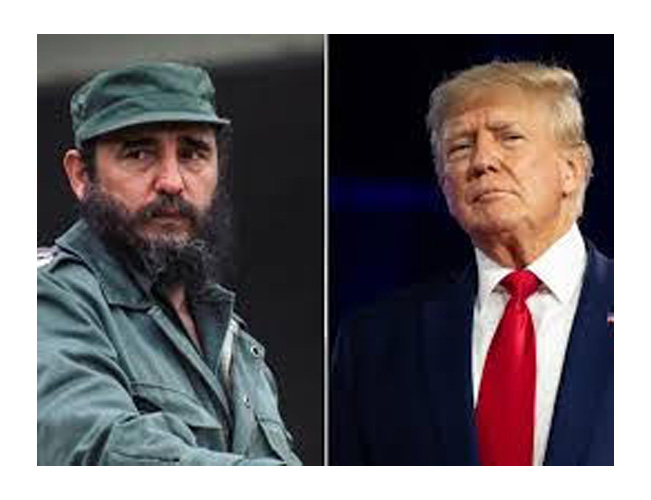
History has a curious sense of humour. One cannot help but wonder what fireworks might have erupted had Fidel Castro ever crossed political swords with Donald Trump.
The Cuban revolutionary , famous for marathon speeches, military fatigues, and an iron will ,spent nearly half a century sparring with American presidents. Yet the arrival of a brash, television-honed populist like Trump would have presented an entirely different kind of adversary.
A Clash of Political Theatre
Castro was, above all, a master of political theatre. From the balconies of Havana’s government buildings he would speak for hours, weaving ideology, history, and fiery anti-imperial rhetoric into a single narrative: Cuba as the defiant David confronting the American Goliath.
Trump, meanwhile, built his political brand on spectacle — rallies, slogans, and a flair for provocation.
Had the two men confronted one another directly, the world might have witnessed an extraordinary contest of personalities: the revolutionary ideologue versus the media-age showman.
Castro’s Likely Response
Castro never shied away from critiquing American leaders. From Dwight D. Eisenhower through George W. Bush, he framed U.S. policy toward Cuba as imperial interference.
Trump’s blunt rhetoric and “America First” nationalism would almost certainly have provided Castro with fresh material.
One can easily imagine the Cuban leader delivering a marathon speech in Havana ,lampooning Trump’s style while portraying him as the latest symbol of what Castro often called “Yankee arrogance.”
Yet Castro was also a strategist. Behind the revolutionary rhetoric, he understood the practical realities of diplomacy. Should opportunities for negotiation have arisen , particularly on trade or sanctions , Castro would likely have exploited them with characteristic pragmatism.
The Caribbean Perspective
For the Caribbean, such a clash would have carried deeper significance. Cuba has long stood as both a symbol of resistance and a complicated neighbour within the hemisphere.
Trump’s policies toward Latin America and immigration stirred debate across the region. Castro, ever the regional storyteller, would undoubtedly have framed those policies within his lifelong narrative of Caribbean independence and sovereignty.
The Verdict of History
Of course, the two men never truly shared the same political stage. Castro died in 2016 just as Trump entered the White House.
But imagining the encounter reminds us how dramatically global politics has changed.
Castro represented the last of the Cold War revolutionaries , leaders forged in guerrilla struggle and ideological conflict. Trump emerged from the age of television, branding, and social media.
Had they met face to face, it might not have been a diplomatic meeting at all.
It would have been political theatre on a global stage , and the Caribbean, no doubt, would have watched with fascination.