 17 January 2026

By Publisher Ray Carmen
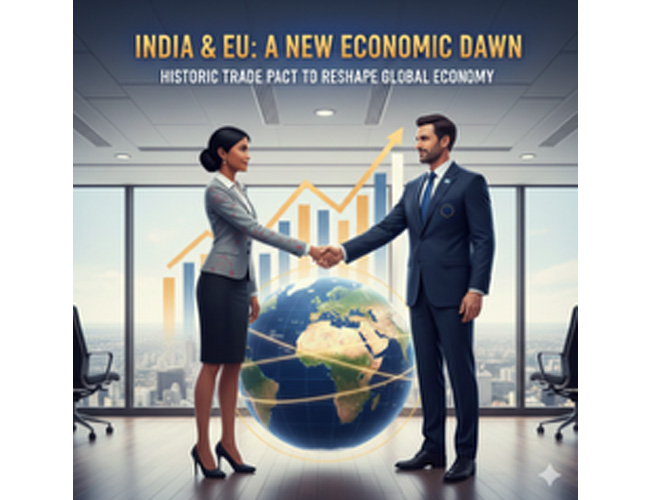
Brussels is buzzing ,and not without reason. Quiet but determined negotiations between India and the European Union are gathering momentum, fuelling serious talk of what could become the largest trade agreement the world has ever seen.
If concluded, an EU–India trade pact would not merely be another free trade deal. It would represent a strategic realignment of global economic power, binding together nearly two billion people, vast industrial capacity, digital innovation, advanced manufacturing, and some of the world’s fastest-growing consumer markets.
In a world unsettled by trade wars, geopolitical fractures, and shifting alliances, this emerging partnership carries profound implications — not just for Europe and India, but for Asia, Africa, the Caribbean, and the wider Global South.
Why This Deal Matters Now
The timing is no coincidence.
Europe is actively seeking to reduce dependence on China, diversify supply chains, and secure reliable partners in technology, pharmaceuticals, energy, and advanced manufacturing. India, meanwhile, is positioning itself as a global production powerhouse, a democratic counterweight in Asia, and a magnet for foreign investment.
Both sides see opportunity , and urgency.
With global trade increasingly shaped by geopolitics rather than pure economics, Brussels and New Delhi understand that who you trade with now defines who you stand with tomorrow.
What’s on the Table
While negotiations remain complex, the ambition is vast:
-
Tariff reductions across industrial goods, automobiles, textiles, and chemicals
-
Expanded access for services, finance, and digital trade
-
Stronger cooperation on green technology, climate policy, and renewable energy
-
Greater alignment on intellectual property, data governance, and innovation
-
Easier movement for skilled professionals and business mobility
For European firms, India offers scale, youth, and growth. For India, Europe offers capital, technology, and access to one of the world’s most lucrative consumer markets.
A Deal Bigger Than Economics
This potential agreement is as much geopolitical as it is commercial.
As global power centres shift, the EU–India relationship signals a move toward a multipolar trade order, where emerging economies are no longer junior partners but co-architects of the system.
It also sends a subtle but unmistakable message to Washington and Beijing:
the world’s trade future will not be dictated by two superpowers alone.
What It Means for the Caribbean and Emerging Markets
For regions like the Caribbean, this deal could open new trade corridors, investment flows, and diversification opportunities.
Indian manufacturing, European logistics, and Caribbean ports could form new supply-chain triangles. Tourism, pharmaceuticals, renewable energy, fintech, and education are all sectors poised to benefit indirectly from closer EU–India ties.
In short, when giants move closer together, the ripple effects travel far.
The Road Ahead
Challenges remain , from agriculture and labour standards to environmental rules and market access. But the political will on both sides appears stronger than at any point in recent years.
If momentum holds, history may look back on this moment as the point when global trade quietly pivoted eastward and outward — away from confrontation and toward cooperation.
Brussels is buzzing. New Delhi is watching closely.
And the world is paying attention.