 19 March 2026

By Publisher Ray Carmen
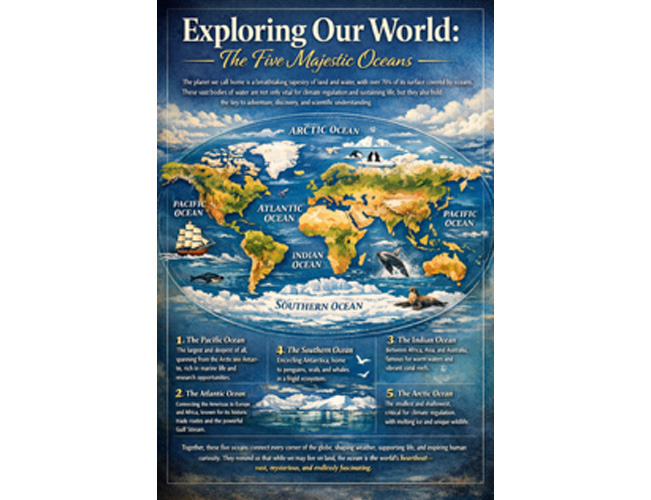
Covering over 70% of our planet, the world’s five oceans are far more than vast bodies of water—they are the lifeblood of humanity. From regulating climate to sustaining biodiversity, oceans underpin every aspect of our survival.
1. The Pacific Ocean
The Pacific is the largest and deepest ocean, acting as a global thermostat. Its currents distribute heat across the planet, influencing weather patterns, rainfall, and the seasons we rely on for agriculture. Without it, much of the world’s climate would be unrecognizably harsh.
2. The Atlantic Ocean
The Atlantic connects continents and cultures, but its importance goes beyond commerce. Its currents, like the Gulf Stream, transport warm water and nutrients, supporting fisheries that feed millions worldwide. The Atlantic is essential to human food security.
3. The Indian Ocean
This ocean is a cornerstone of trade and a natural source of protein, as countless coastal communities depend on its fish and marine life. Its warm waters also contribute to the water cycle, influencing monsoons and agriculture in Asia and Africa.
4. The Southern Ocean
Encircling Antarctica, the Southern Ocean drives global ocean currents and absorbs massive amounts of carbon dioxide. This helps regulate Earth’s temperature and mitigates the impacts of climate change—a direct lifeline for humans.
5. The Arctic Ocean
Though the smallest, the Arctic Ocean is a critical climate regulator. Its ice reflects sunlight, helping control global temperatures. Changes here affect weather systems worldwide, making it crucial for human survival and planning.
Why Oceans Matter for Us
Oceans provide food, regulate climate, store carbon, generate oxygen, and supply livelihoods for billions. They are essential to our economy, health, and very existence. Protecting them is not optional—it is a survival imperative.
Together, these five oceans remind us that human life is inextricably linked to the health of our waters. Caring for them ensures our future, making them the ultimate guardians of life on Earth.