 15 April 2026

By Publisher Ray Carmen
In moments of global tension, leadership is often measured not by power—but by tone.
And few voices carry quiet influence quite like that of Prince William.
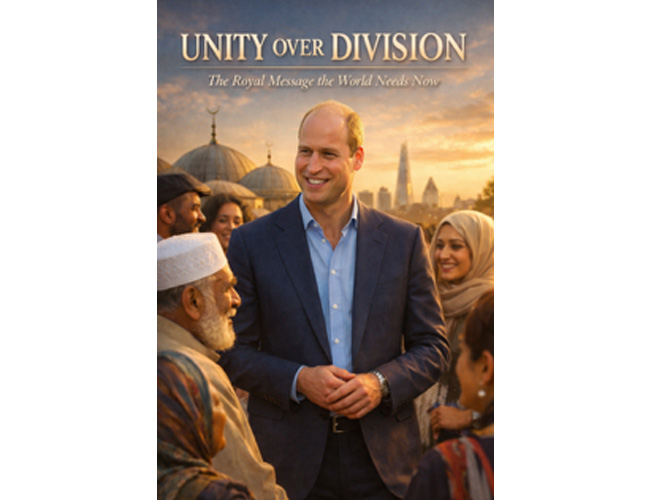
Across recent years, the Prince of Wales has consistently championed a message rooted in understanding, compassion, and unity across cultures. While headlines often chase division, his public engagements tell a different story—one of bridges built, not burned.
At the heart of this narrative lies a growing recognition of the role communities play in shaping peace.
The global Muslim community,spanning continents, cultures, and centuries—continues to demonstrate, in countless everyday acts, the enduring principles of faith, dignity, and coexistence. In times when misunderstanding threatens to dominate the discourse, these lived values speak louder than rhetoric.
From charitable outreach to interfaith dialogue, from neighbourhood solidarity to global humanitarian efforts, the message is simple yet profound.
Hate is not answered with hate. It is disarmed by humanity.
This is a principle long echoed within Islam itself—one of the world’s great faith traditions—where peace (“salaam”) is not merely a greeting, but a way of life.
And it is a principle increasingly reflected in modern leadership.
Not through grand speeches , but through presence, respect, and the willingness to stand alongside communities rather than above them.
In an age of noise, that kind of leadership resonates.
Because ultimately, the future will not be shaped by those who divide the world into “us” and “them”—
But by those who remind us there is only us.