By Publisher Ray Carmen
A viral headline. A global reaction. But what is actually true?
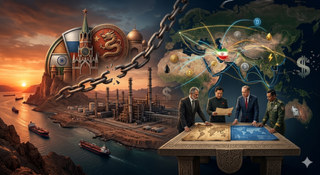
A claim circulating across LinkedIn and social media alleges that Iran has signed a $52 billion energy and military agreement with BRICS nations, supposedly reshaping global oil routes and weakening Western sanctions.
It is a powerful story.
But it is not verified by any credible international source.
WHAT CAN ACTUALLY BE CONFIRMED
Despite the viral narrative, there is:
-
No official announcement from BRICS
-
No confirmation from major agencies such as Reuters or AP
-
No treaty or military pact documentation
Instead, the claim appears to originate from social media posts and LinkedIn commentary, not institutional reporting.
Some posts even cite “official sources” without evidence, contributing to widespread misinformation online.
WHAT IS REAL: THE DEEPER GEOPOLITICAL SHIFT
While the $52 billion deal itself is unverified, the broader trend is real and significant:
1. Iran is already inside BRICS
Iran joined BRICS+ in 2024, strengthening its political and economic alignment with major emerging economies.
2. Energy realignment is accelerating
Global oil trade is increasingly exploring non-dollar settlement systems, including yuan and regional currencies.
3. BRICS is evolving—but not as a unified bloc
Analysts describe BRICS more as a cooperative platform than a security alliance, with internal differences limiting collective action.
4. The Strait of Hormuz remains a critical pressure point
Roughly 20% of global oil flows through this region, making Iran a strategically important player regardless of any single deal.
THE KEY DISTINCTION
What makes this story important is not its accuracy—but what it reveals:
-
Viral geopolitical content spreads faster than verification
-
Energy politics are highly sensitive to speculation
-
BRICS is increasingly seen as part of a multipolar transition narrative
But the reality remains:
There is no confirmed $52 billion Iran–BRICS military-energy pact.
FINAL INSIGHT
The world is not being reshaped by a single overnight agreement.
It is being reshaped by:
-
slow energy realignment
-
shifting trade currencies
-
evolving geopolitical blocs
-
and long-term strategic competition
The truth is less dramatic than the headline—but far more important.