 9 July 2026

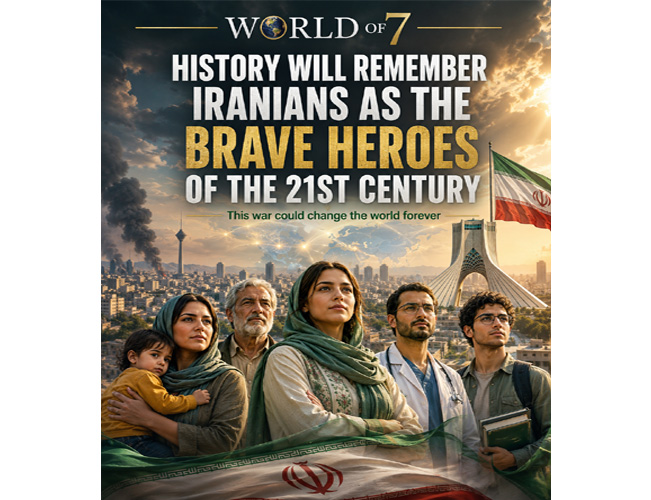
THIS WAR COULD CHANGE THE WORLD FOREVER
By Publisher Ray Carmen
History does not remember nations only by the weapons they possessed, the battles they won or the governments that ruled them.
History remembers the courage of ordinary people.
And when the story of this century is eventually written, the people of Iran may be remembered among its bravest.
They have endured war, sanctions, political repression, economic hardship, internet restrictions, fear, bereavement and uncertainty—yet millions continue to protect their families, care for the injured, preserve their culture and confront each new day with extraordinary resilience.
The Iranian people must never be confused with every decision made in their name.
A government is not the same as a civilisation.
A military command is not the same as a mother protecting her children, a doctor treating the wounded, a journalist recording the truth, a student demanding a future or a family sheltering beneath the sound of aircraft and explosions.
This war, which began with United States and Israeli attacks on Iran on 28 February 2026, has entered another dangerous phase. Renewed American strikes, Iranian retaliation, attacks involving Gulf states and continuing threats to commercial shipping have severely weakened attempts to establish a lasting ceasefire.
No responsible person should celebrate this escalation.
Attacks on civilians, threats against neighbouring countries, assaults on commercial vessels and the destruction of cultural heritage must be condemned—regardless of which flag is carried by those responsible.
Iran is one of the world’s great civilisations.
Its contribution to poetry, philosophy, medicine, architecture, mathematics, art and human thought stretches across thousands of years. Yet even Iran’s ancient heritage is now suffering collateral damage, with historic sites and irreplaceable cultural treasures affected by military strikes.
That is why this conflict could change the world forever.
The Strait of Hormuz is not merely a narrow stretch of water beside Iran. It is one of the most strategically important energy routes on Earth. Renewed fighting has already raised fears of disruption to global oil supplies, higher prices, inflation and wider economic instability.
But the consequences extend far beyond oil.
This war could reshape nuclear diplomacy, regional alliances, relations between the West and the Global South, the future of the Gulf, the credibility of international law and the balance of power across the Middle East.
It could also determine whether future international disputes are settled through negotiation—or through missiles, blockades and collective punishment.
The bravery of Iranians should therefore not be measured only by battlefield resistance.
True courage is also found in survival.
It is found in citizens who refuse to surrender their humanity.
It is found in families who continue to love one another while the world around them becomes uncertain.
It is found in those who oppose tyranny without surrendering to hatred.
It is found in those who demand peace without accepting humiliation.
And it is found in those who understand that patriotism does not require silence when leaders place innocent lives in danger.
The Iranian people deserve security, dignity and freedom from foreign attack.
They also deserve freedom from fear, repression and political violence within their own country.
Both truths can exist together.
The world must now resist the temptation to turn Iran into another permanent battlefield.
The path forward must be diplomacy, civilian protection, freedom of navigation, respect for sovereignty, renewed nuclear negotiations and an enforceable regional peace settlement.
There has already been too much death.
Too much destruction.
Too much grief.
History may remember the Iranian people as heroes.
But history will judge the leaders of every nation by whether they chose peace when peace was still possible.
WORLD OF 7 — ONE PLANET. 7 CONTINENTS. ONE HUMAN FAMILY.